Short Courses
Title: Application of the Visual Minteq code in Hydrogeochemical and Geothermal Investigations
Instructors
Michael Kersten
Course Objectives
This course introduces the practical application of thermodynamics to environmental and geothermal investigations. Emphasis is placed on the use of aqueous speciation tools, such as the Visual MINTEQ code, to characterize the geochemical mobility of trace elements, particularly toxic oxyanions such as arsenate, across a wide range of subsurface environments from shallow groundwater systems to geothermal fluids at temperatures of up to 100°C.
The course is designed for environmental consultants, researchers, and graduate students working in groundwater studies, contaminated-site assessment, remediation, and geothermal resource development. By the end of the course, participants will have developed a stronger understanding of how thermodynamic speciation codes can be used to address practical questions related to groundwater quality, contaminant fate, and the sustainable use of subsurface energy resources.
Course Overview
Aim of this course is to introduce participants to the modeling of hydrogeochemical processes that occur as groundwater moves along its flow path toward its ultimate discharge in springs or wells. The course is devoted entirely to hands-on computer exercises. Major hydrogeochemical processes, including dissolution/precipitation and adsorption/desorption, will be introduced and practiced step-by-step, beginning with simple systems and progressing toward more complex, integrated natural case studies, eventually contributed by participants.
Participants will develop competence in using essential modules of the freely available, user-friendly, public domain Visual MINTEQ code (https://vminteq.com/). Step-by-step exercises will introduce the necessary input data, database selection and use, and model set-up using simple examples. Practical case scenarios including contaminated aquifers and geothermal energy applications will then be explored on participants’ own laptops, with particular emphasis on processes such as oxyanion adsorption onto oxide minerals. All tutorials and case-study examples will be presented in clear, accessible English. Fundamental aspects of aqueous chemistry will be explored using Excel or WPS spreadsheets to visualize and interpret the results of the model runs.
At end of the course, participants will have the opportunity to discuss their own case studies and receive initial guidance on how the software introduced can be used to address specific modeling challenges.
Reference: Kersten M., Kulik D.A. (2026): Exothermic adsorption of oxyanions by goethite: A review of concepts and tools for quantifying thermodynamic data. Reviews in Mineralogy & Geochemistry Vol. 91B, 343-380 (http://dx.doi.org/10.2138/rmg.2026.91B.13).
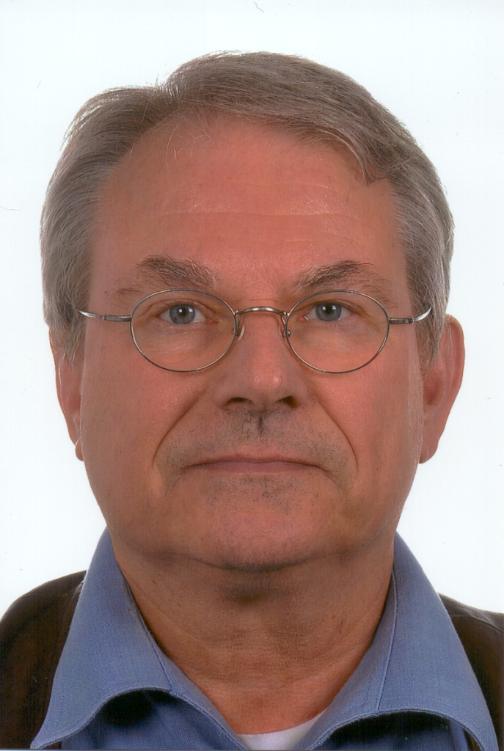
Michael Kersten is an environmental geochemist, retired from the Johannes Gutenberg-University Mainz, Germany. In 1988, he obtained his PhD degree in Geosciences at the University of Technology Hamburg, Germany, under supervision by Prof. Ulrich Förstner. After a three years postdoc stay with Prof. Werner Stumm at EAWAG, Switzerland, he moved in 1994 as group leader Geochemistry to the Baltic Sea Research Center at Rostock, Germany. In 1997, he was appointed professor at the Johannes Gutenberg-University Mainz, Germany. He has been Editor-in-Chief of the IAGC journal Applied Geochemistry in 2012-2022, and up to present Editor-in-Chief of the Springer Book series Environmental Science and Engineering. Since 2014, he has been actively collaborating on groundwater resources with projects at CUGB Beijing. He has authored more than 300 scientific papers.
Contact us




{{ 'en' == 'cn' ? item.name : item.name_en }}
{{ 'en' == 'cn' ? item.desc : item.desc_en }}