Short Courses
Title: Applications of Isotopes and Noble Gases in Hydrological and Geothermal Investigations
Instructors
Orfan Shouakar-Stash and Daniele L. Pinti
Course Objectives
This course introduces the practical application of environmental isotope techniques, compound-specific isotope analysis (CSIA), and noble gas geochemistry in hydrological, environmental, and geothermal investigations. The emphasis is on how these tools can be used to characterize fluid sources, flow paths, residence times, contaminant origins, and transformation processes across a wide range of subsurface environments, from shallow groundwater systems to deep geothermal fluids.
The course is designed for environmental professionals, government scientists, regulators, consultants, researchers, and graduate students working in groundwater, contaminated-site assessment, remediation, and geothermal resource development. By the end of the course, participants will have a stronger understanding of how isotope and noble gas methods can be selected, combined, and interpreted to address practical questions related to groundwater quality, contaminant fate, and the sustainable use of subsurface energy resources.
Course Overview
The course provides an overview of current isotope-based approaches for investigating groundwater quality, contaminant behaviour, subsurface fluid movement, and geothermal systems. It combines fundamental concepts with practical applications and case studies from a variety of environmental and geological settings.
A major component of the course focuses on the use of stable and radiogenic isotopes, including ¹³C, ²H, ¹⁸O, ⁸⁷Sr/⁸⁶Sr, ³⁷Cl, ⁸¹Br, ³H, and ¹⁴C, to identify contaminant sources, characterize groundwater–rock interactions, evaluate attenuation processes, and assess groundwater residence times. Particular attention will be given to groundwater contamination associated with LNAPLs, DNAPLs, and urban and industrial activities.
The course will also examine recent developments in compound-specific isotope analysis, including ¹³C-CSIA, ²H-CSIA, ³⁷Cl-CSIA, and ⁸¹Br-CSIA. These techniques will be discussed in the context of contaminant source differentiation, degradation assessment, plume characterization, and remediation monitoring.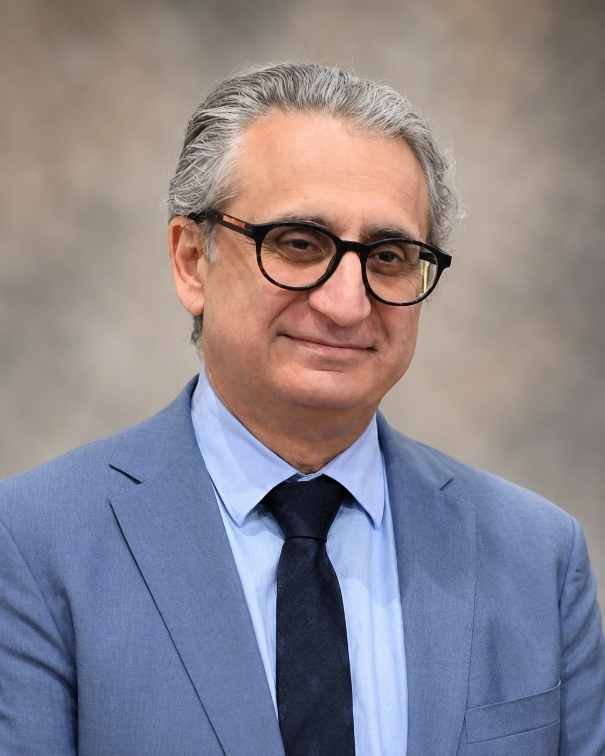
Dr. Orfan Shouakar-Stash is an isotope hydrogeochemist with more than 30 years of experience in environmental and hydrogeochemical applications of isotope techniques. He is the CEO of Isotope Tracer Technologies Inc. (IT²) in Waterloo, Canada, and an Adjunct Professor in the School of Engineering at the University of Guelph. His work focuses on the development and application of isotope methods for contaminant investigations, groundwater and water-quality studies, and related environmental problems. Over the years, he has contributed to a range of research and applied projects in Canada and internationally, working with universities, government agencies, consultants, and research organizations. He has authored and co-authored scientific papers, delivered more than 100 presentations at national and international conferences, and has supervised and trained graduate students, visiting scientists, and technical personnel. He also serves as a peer reviewer for several scientific journals. Dr. Shouakar-Stash is active in the international geochemical community and currently serves as Secretary of the International Association of Geochemistry (IAGC). Through IT², he continues to support collaborative research and applied environmental projects involving stable isotope and compound-specific isotope analysis.
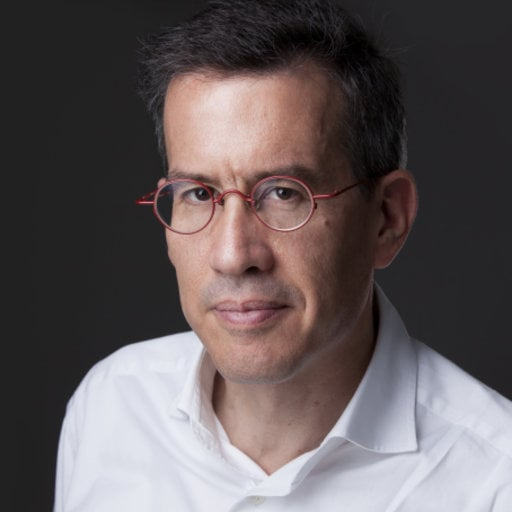
Daniele L. Pinti Daniele L. Pinti is a noble gas isotope geochemist, director of Geotop – one of the largest geoscience-oriented research centers in Canada – and full professor at the Earth and Atmospheric Sciences Department of the Université du Québec à Montréal. In 1989, he obtained his MSc degree in Geology at the University of Rome, Italy, working on soil gases at Latera geothermal field, Central Italy. After a brief interval in the industry, he moved in 1991 at Université de Paris VI for a PhD in noble gas geochemistry applied to oil resources. In 1996, he joined the Earth and Planetary Science group at Osaka University, Japan, for a post-doctorate in Archean Geology, developing nitrogen isotopes as isotopic biomarkers with studies in Australia, Greenland, and South Africa. From 1999 to 2004, he was an assistant professor at the Université de Paris SUD, working on K-Ar dating. In 2004, he joined the UQAM, where he built a noble gas laboratory, with activities spanning from groundwater dating to geothermal resources. Since 2014, he has been actively working on geothermal resources with projects in Mexico, Chile, Argentina, Iceland, La Reunion, Hawaii and Japan. He has authored more than 110 scientific papers.




{{ 'en' == 'cn' ? item.name : item.name_en }}
{{ 'en' == 'cn' ? item.desc : item.desc_en }}